Begin with the concern . The treatment follows.

Most clinics sell treatments first. We diagnose first. Whatever brought you here — pigmentation, hair fall, fatigue, ageing skin, weight, hormonal change, low energy or chronic concerns — there is almost always a deeper cause and a sequenced clinical pathway. This page is the most complete guide to how Dr. Jaspreet Kour evaluates and treats every concern at Mediglo.

Diagnose First

Every consult begins with a clinical assessment by Dr. Kour — visual, dermoscopic, hormonal correlation where indicated.

Treat the Cause

Symptoms repeat when treated in isolation. We address the underlying mechanism alongside the visible concern.

Sequence Matters

The right treatment in the wrong order under-delivers. Protocols phased over weeks and months for compounding outcomes.

Why a dermatologist matters.

Skin and hair are not cosmetic surfaces. They are medical organs — connected to the endocrine system, the immune system, and the gut. A pimple may be hormonal. Hair fall may be thyroid-driven. Pigmentation may be photo-induced, autoimmune, or post-inflammatory. The diagnosis dictates the treatment — and the wrong diagnosis means the wrong treatment, indefinitely. A dermatologist is a physician who has trained for an additional three years specifically in skin, hair, and nail medicine. They can diagnose what an aesthetician cannot, prescribe what a beautician cannot, and identify when a “skin” problem is actually a systemic one. At Mediglo At Mediglo, every patient — whether they come for a facial or a complex protocol — is seen and assessed by a doctor first.

Diagnosis Over Description

"Acne" is not a diagnosis — it is a finding. The diagnosis is whether it's hormonal, comedonal, fungal, or rosacea-misidentified. Each requires a different protocol.

Prescription Authority

Many of the treatments that actually work — topical retinoids, oral therapy, hormone-modulating prescriptions, prescription-grade peels — are restricted to medical practitioners. Beauty clinics cannot legally provide them.

Recognition of Red Flags

An asymmetric mole, a non-healing patch, persistent redness, or sudden hair shedding may signal something more serious. A dermatologist screens for these. A facialist cannot.

Skin.

Dermatology · Aesthetic Medicine

Why Acne Is a Medical Concern, Not a Cosmetic One

Acne is not a sign of poor hygiene. It is an inflammatory disease of the pilosebaceous unit, driven by four converging mechanisms: excess sebum production (hormonal), follicular hyperkeratinisation (cell-turnover failure), proliferation of Cutibacterium acnes, and the immune response that follows. In adult Indian women aged 22–40, hormonal and stress-mediated acne now outpaces classical adolescent presentations — frequently linked to PCOS, thyroid dysfunction, or insulin resistance.

How Dr. Kour Treats Acne

Diagnosis first: grading (Comedonal · Papulopustular · Nodulocystic · Hormonal), trigger assessment (PCOS, dietary, cosmetic), hormonal panel where indicated. Treatment is sequenced — calm active inflammation first, address pigmentation second, scarring last. The patient typically sees meaningful change within the first 4–6 weeks.

Pigmentation Is Not One Condition

Pigmentation is several conditions wearing the same surface appearance. Melasma (hormonal, deep), post-inflammatory hyperpigmentation (acne-related), sun-induced tan, freckles, ashy dermatosis, and age spots all have different mechanisms and respond to different treatments. Treating them with a single approach is the most common reason patients see “no result” at non-dermatologist clinics.

In Indian skin (Fitzpatrick III–V), aggressive treatment is the wrong instinct. Melanocytes — the pigment-producing cells — react to inflammation by producing more pigment, not less. A harsh peel, an aggressive laser pass, or even strong skincare can rebound into worse pigmentation. The objective is gradual de-pigmentation and long-term suppression — never erasure.

Diagnosis Determines Everything

A Wood’s lamp examination tells us whether pigment sits at the epidermal level (responsive to peels and topicals) or deeper at the dermal level (requires laser toning). Trigger correlation is essential — UV exposure, hormonal triggers (pregnancy, contraceptives, perimenopause), thyroid function, and even certain medications can drive pigmentation. Sun protection is non-negotiable; without it, no protocol holds.

Acne Scars Are Permanent — Until Treated

Acne scars are permanent collagen architecture changes. They don’t fade with skincare, and “natural remedies” do nothing for them. There are four distinct morphologies — ice-pick, boxcar, rolling, and hypertrophic — and each responds to different modalities. Most patients have a mix; most clinics treat them as one. They aren’t.

Realistic outcome benchmarks matter. Significant improvement (60–80%) is achievable with multi-modal treatment over 6–12 months. Total disappearance is not the honest goal — significant smoothing, refraction-of-light improvement, and major confidence return are.

Why Single-Treatment Approaches Fail

Ice-pick scars need TCA Cross or punch elevation. Rolling scars require subcision and RF microneedling. Boxcar scars respond to laser resurfacing. Hypertrophic scars need anti-inflammatory and RF protocols. A single patient often has all of these, layered. Doing only microneedling, or only laser, will under-deliver against the patient’s expectation.

“Dull Skin” Is Several Measurable Issues

Surface dehydration. Dead-cell buildup. Low cellular turnover. Micro-circulatory deficit. Oxidative stress. A “facial” addresses one. A medi-facial — when properly designed — addresses four or five. The difference shows up the next morning.

For our patients, the question is rarely “do I look ok” — it is “do I look as rested as I’d like before [event/photoshoot/wedding/board meeting]”. Mediglo’s medi-facial protocols are calibrated to that brief: same-day glow with no downtime, multi-session restoration for sustained quality.

How Dr. Kour Treats It

Skin assessment determines whether the issue is barrier-related, hydration-related, pigmentary, or vascular. Treatments are then layered for one-session refresh or multi-session restoration depending on the timeline.

Sometimes “Unwanted Hair” Is a Hormonal Signal

Persistent coarse hair on the chin, jawline, chest or abdomen in women is rarely just cosmetic — it can signal PCOS, hyperandrogenism, or thyroid dysfunction. Mediglo screens for it as part of the consult. Treatment alone, without addressing the underlying hormonal driver, will see hair return.

The Technology Gap Between Clinics Is Enormous

Single-wavelength diodes deliver mediocre results in Indian skin and risk pigmentary side effects. Multi-wavelength platforms do not. Mediglo runs two of the most advanced systems available worldwide: Soprano Titanium (triple-wavelength: 755nm Alexandrite + 810nm Diode + 1064nm Nd:YAG) and Triton Diolaze (multi-wavelength). This means safer, more effective hair reduction across every skin tone — Fitzpatrick I to VI, including the deepest skin tones in Indian populations.

Wavelength is matched to your specific skin tone and hair characteristics. Settings are doctor-supervised and adjusted cycle-by-cycle. This is the opposite of the preset-button salon approach.

Moles & Skin Growths.

Moles · Skin Tags · Milia · Warts · DPN

Why a Dermatologist Must See Every Mole Before Removal

A mole is a collection of melanocytes. Most are entirely benign and stay that way. But some change — and the early signs of malignant melanoma are subtle: asymmetry, border irregularity, colour variation, diameter, evolution (the “ABCDE” criteria). A dermatologist evaluates these clinically and with dermoscopy (a magnified, polarised examination), then decides: routine removal, removal with histopathology, or referral.

This is why Mediglo never removes a mole without examining it first. We use radiofrequency electrocautery, CO₂ laser, or surgical excision depending on the lesion type, depth, and need for histology. Where there is any clinical concern, the specimen goes to histopathology.

When to Get a Mole Checked

Any mole that is changing in size, shape, or colour. Any mole that is itching, bleeding, or crusting. New moles after age 35. Moles in sun-exposed areas with irregular borders. Sudden appearance of multiple new moles. Erring on the side of being checked is the only correct instinct.

Common, Benign, and Cosmetically Removable

Skin tags (acrochordons) are soft, fleshy growths on the neck, underarms, eyelids, and groin — extremely common, entirely benign, and frequently associated with insulin resistance, friction, or genetic predisposition. Dermatosis Papulosa Nigra (DPN) are small dark papules that appear on the cheeks of darker skin types — particularly common in adults of South Asian and African descent. Both can be removed cleanly in-office.

Removal is straightforward — radiofrequency cautery, electro-cautery, or fine-cautery laser. The procedure is doctor-only because it requires precise depth control to avoid pigmentation or scarring, especially on the face. We never use cosmetic-grade tools or untrained hands for these.

Three Different Things, Frequently Confused

Milia are tiny keratin-filled cysts — usually around the eyes — that cannot be “extracted” by a facial; they require a needle-puncture by a doctor. Sebaceous cysts are deeper structures requiring excision. Warts are viral (HPV-driven) and require RF cautery, cryotherapy, or laser ablation. Each is different. Each has its own protocol.

Salons attempting to extract these almost always damage the surrounding skin. The procedure looks small; the consequences of doing it wrong — pigmentation, marking, infection — are not.

Eczema, Rosacea & Chronic Skin.

Inflammatory · Autoimmune · Barrier Disorders

Eczema Is a Barrier Disease

Atopic dermatitis (eczema) is a chronic inflammatory disease where the skin barrier is genetically and immunologically compromised. The skin loses water faster than it should, allergens and irritants penetrate more easily, and the immune system over-responds. The result is itch, redness, dryness, and inflammation cycles.

Treatment has two arms: restoring the barrier (medical-grade emollients, identifying and eliminating triggers) and controlling the inflammatory response (topical anti-inflammatory therapy, systemic therapy in severe cases). Newer biologic therapies have transformed outcomes in moderate-to-severe disease and are prescribable by dermatologists.

A mole is a collection of melanocytes. Most are entirely benign and stay that way. But some change — and the early signs of malignant melanoma are subtle: asymmetry, border irregularity, colour variation, diameter, evolution (the “ABCDE” criteria). A dermatologist evaluates these clinically and with dermoscopy (a magnified, polarised examination), then decides: routine removal, removal with histopathology, or referral.

This is why Mediglo never removes a mole without examining it first. We use radiofrequency electrocautery, CO₂ laser, or surgical excision depending on the lesion type, depth, and need for histology. Where there is any clinical concern, the specimen goes to histopathology.

When to Get a Mole Checked

Any mole that is changing in size, shape, or colour. Any mole that is itching, bleeding, or crusting. New moles after age 35. Moles in sun-exposed areas with irregular borders. Sudden appearance of multiple new moles. Erring on the side of being checked is the only correct instinct.
Rosacea Is Not Acne

Rosacea is a chronic vascular and inflammatory condition affecting central facial skin — characterised by persistent redness, flushing, visible capillaries, and sometimes papules and pustules that look like acne. Treating rosacea as acne — with peels, salicylic, harsh actives, or scrubs — typically makes it dramatically worse.

The diagnosis matters. The treatment is gentler, involves vascular lasers (IPL, Nd:YAG), specific anti-inflammatory protocols, and trigger management (heat, alcohol, certain foods, sun, stress). Done correctly, rosacea is highly manageable.

Psoriasis Is Systemic

Psoriasis is an autoimmune disease — not just “dry skin.” It is associated with arthritis, cardiovascular disease, and metabolic syndrome, and requires both topical and systemic management. The good news: biologic therapies and JAK inhibitors have transformed outcomes over the past decade. Patients who once lived with extensive disease can now achieve near-clear skin.

This is a condition that demands a dermatologist — every other practitioner can only manage the surface.

Hair.

Trichology · DHT Pathways · Regenerative · Transplant

Eczema Is a Barrier Disease
Understanding the Hair Cycle

Every hair on your head is in one of three phases at any moment: anagen (active growth, 2–6 years), catagen (transition, 2–3 weeks), or telogen (rest and shedding, ~3 months). On a healthy scalp, around 90% of hairs are in anagen at any time. Shedding 50–100 hairs daily is normal — anything more is pathological.

The four most common patterns of pathological hair loss are: androgenetic alopecia (genetic, DHT-driven, progressive), telogen effluvium (post-stress, post-illness, post-partum, post-COVID — diffuse and reversible), nutritional deficiencies (iron/ferritin, vitamin D, B12, protein), and thyroid dysfunction. Each requires a different protocol; misdiagnosis wastes 4–6 months and worsens psychological burden.

Why a Dermatologist with Trichology Specialism Is Different

Most hair loss patients have already tried OTC supplements, oils, online influencer recommendations, and salon serums — all of which target undefined “hair fall” without identifying the cause. Trichoscopy (digital scalp magnification) and a correlated blood panel change the conversation immediately. We see miniaturisation patterns invisible to the naked eye. We test for ferritin, thyroid, vitamin D, B12, hormone profile (especially in women). The result is a diagnosis — and from there, a real plan.

Treatment has two arms: restoring the barrier (medical-grade emollients, identifying and eliminating triggers) and controlling the inflammatory response (topical anti-inflammatory therapy, systemic therapy in severe cases). Newer biologic therapies have transformed outcomes in moderate-to-severe disease and are prescribable by dermatologists.

A mole is a collection of melanocytes. Most are entirely benign and stay that way. But some change — and the early signs of malignant melanoma are subtle: asymmetry, border irregularity, colour variation, diameter, evolution (the “ABCDE” criteria). A dermatologist evaluates these clinically and with dermoscopy (a magnified, polarised examination), then decides: routine removal, removal with histopathology, or referral.

This is why Mediglo never removes a mole without examining it first. We use radiofrequency electrocautery, CO₂ laser, or surgical excision depending on the lesion type, depth, and need for histology. Where there is any clinical concern, the specimen goes to histopathology.

When to Get a Mole Checked

Any mole that is changing in size, shape, or colour. Any mole that is itching, bleeding, or crusting. New moles after age 35. Moles in sun-exposed areas with irregular borders. Sudden appearance of multiple new moles. Erring on the side of being checked is the only correct instinct.

What DHT Actually Does

Dihydrotestosterone (DHT) is a potent androgen converted from testosterone by the enzyme 5-alpha reductase. In genetically susceptible hair follicles — typically along the top, frontal, and crown areas — DHT binds to androgen receptors and progressively miniaturises the follicle. The hair grows shorter, thinner, and more lightly pigmented with each cycle, until it stops growing altogether. This is the mechanism of androgenetic alopecia (AGA) — male and female pattern baldness.

The follicles at the back and sides of the scalp are genetically resistant to DHT. This is why these areas remain dense in even advanced pattern baldness — and it’s also the principle that makes hair transplant work: hair from the resistant zone, transplanted to the affected area, retains its DHT-resistance. Forever.

Slowing or Reversing It

The clinical goal in pattern baldness is two-fold: halt progression (suppress DHT impact) and stimulate existing follicles (reverse early miniaturisation). Done early — within 1–3 years of onset — the outcome is often dramatic. Done late, the goal becomes preserving what remains and planning surgical restoration.

Doctor-prescribed medical therapy (topical and oral options that modulate DHT activity), regenerative protocols (PRP, GFC, exosomes), and where appropriate, surgical hair transplant, form the complete pathway. Self-prescribed supplements and oil massages do not address DHT.

What Exosomes Are

Exosomes are nano-sized vesicles secreted by cells — particularly stem cells — that act as the body’s communication system. They carry growth factors, peptides, microRNA, and signalling molecules that instruct surrounding cells to repair, regenerate, or modulate inflammation. In dermatology and trichology, this signalling cascade can stimulate dormant hair follicles, accelerate skin healing, and amplify the response to other regenerative procedures.

Why Exosomes vs PRP

PRP uses your own platelets — effective, well-established, but variable depending on your platelet count and quality. Exosomes are standardised, lab-derived, and contain a much broader panel of signalling molecules. For patients who haven’t responded fully to PRP, who are older, who have systemic conditions affecting platelet quality, or who simply want the most current protocol, exosomes are typically the next step.

At Mediglo, exosome therapy is offered for: hair restoration (often layered with PRP/GFC), skin rejuvenation (post-laser, post-microneedling for amplified collagen response), and scar remodelling.

Important clinical note: Exosome therapy is a developing field. Quality of the source matters enormously — Mediglo uses only certified, clinical-grade exosome preparations from established suppliers, never untested or imported “research grade” products.
What FUE Actually Is

Hair transplant in 2026 is almost entirely FUE — Follicular Unit Extraction. Individual follicular units (1–4 hairs each) are extracted from the donor zone (back and sides of the scalp, where follicles are DHT-resistant) and implanted in the affected area at angles, depth, and density that mimic natural growth. There are no linear scars and recovery is typically 7–10 days. The result, when planned and executed correctly, is permanent — those transplanted follicles retain their DHT-resistance for life.

Why Most Hair Transplants Look Wrong

Three reasons: poor hairline design (too low, too straight, too dense at the front — the “doll’s hair” look), donor over-harvesting (depleting the donor zone permanently for short-term coverage), and unrealistic graft counts on Norwood VI–VII patients where the donor cannot supply what the demand requires. A good transplant is as much artistry and restraint as it is technique.

Candidacy: Who It Works For

Best candidates: stable progression (not actively losing fast), good donor density, realistic expectations, willingness to continue medical therapy on existing native hair. Worst time to transplant: actively progressing AGA in a young patient — without medical therapy concurrently, the native hair around the transplant continues to thin, creating an unnatural island. We will tell you honestly if you should not transplant yet.

The Mediglo Approach

Pre-transplant: Norwood staging, donor density count, hairline mapping (drawn before procedure, agreed with you). During: meticulous extraction, careful storage of grafts, hairline placement at correct angle and irregular natural pattern. Post: PRP/exosome support to maximise graft survival, continued medical therapy on native hair, monthly follow-ups for the first year.

Female Hair Loss Is Hormonal Until Proven Otherwise

Female hair loss is overwhelmingly hormonal in mechanism, but presents diffusely (rather than the male’s frontal/crown pattern). Common drivers include postpartum oestrogen decline, PCOS-driven androgen excess, peri-menopausal change, thyroid dysfunction, and long-term oral contraceptive cycling. All are diagnosable and most are reversible if addressed.

Most non-specialist clinics treat female hair loss with a male-pattern protocol. This is wrong. Female-pattern protocols emphasise hormonal correction first, ferritin and Vitamin D restoration, and gentler, longer regenerative cycles — never aggressive single-shot solutions.

Ageing is biology, not fate.

For most of medical history, ageing was treated as inevitable. The last fifteen years have rewritten that story. We now understand ageing as a set of distinct, measurable cellular processes — the “hallmarks of ageing” — and we have growing tools to address each one. Mediglo’s approach to ageing addresses the visible (skin, hair, body) and the invisible (cellular, mitochondrial, hormonal) in parallel.

Old, damaged cells accumulate and produce inflammatory signals that age neighbouring tissue. The body’s clean-up system slows.

The cell’s energy producers become less efficient — fatigue, slower recovery, reduced cognitive sharpness, accumulated oxidative damage.

Skin loses 1% collagen per year after 25. Bone density drops. Cartilage thins. The structural framework of the body softens.

Sex hormones, growth hormone, thyroid output all shift over decades — affecting skin, hair, mood, muscle, sleep, and cognition.

“Inflammageing” — the slow-burning systemic inflammation that accelerates every other ageing process and underlies most chronic disease.

The protective caps at the end of chromosomes shorten with each cell division. Eventually cells stop dividing entirely.

What Mediglo Does About It

The Mediglo approach to ageing is multi-system and sequenced. We restore visible tissue (skin density, hair quality, body contour) using regenerative aesthetics, while addressing the invisible drivers — cellular energy, oxidative load, hormonal balance, inflammation — through longevity protocols. The two are never separated.

A patient at 35 needs different layered intervention than a patient at 55. The principle is the same: do not chase the last visible problem — slow the underlying process.

Skin Architecture

Profhilo, NCTF, Rejuran Healer for dermal density. Morpheus8 and HIFU for collagen restructuring. Bio-stimulators for long-term remodelling.

Cellular Energy

NAD+ IV therapy, mitochondrial cofactor support, hyperbaric oxygen for tissue oxygenation.

Inflammatory Load

Glutathione, IV antioxidant protocols, infrared sauna, cold plunge — measurable inflammation markers respond.

Recovery & Sleep

PEMF therapy, red light, structured recovery — restorative sleep is itself the most powerful longevity intervention.

Hormonal Awareness

Where indicated, panels and coordination with your physician. Hair, skin, and body composition are all hormone-responsive.

Dermatology Diet

Specific protocols for acne (low glycaemic, dairy assessment), pigmentation (antioxidant load), and ageing (collagen-supporting nutrient strategy).

Hair Nutrition Plan

Protein adequacy, ferritin restoration, vitamin D, biotin where indicated, omega-3 strategy.

Weight & Metabolic Counselling

Glycaemic stability, protein-led meals, intentional muscle preservation.

Sleep Restoration

Circadian alignment, light hygiene, magnesium and supplementation where needed.

Stress & Recovery

Practical interventions — breathwork, infrared sauna, PEMF, structured recovery days.

How Mediglo Builds the Foundation

Every patient who enters a Mediglo programme — for skin, hair, weight, or longevity — receives a foundational lifestyle assessment: nutrition (with attention to protein, micronutrients, glycaemic load), sleep, stress, movement, and any specific lifestyle drivers of their concern. We work with the patient on what’s realistic, not what’s textbook.

For the patient with acne, we look at dairy and high-glycaemic load. For hair loss, ferritin and protein adequacy. For ageing skin, sleep and oxidative load. For weight, glycaemic stability and resistance training. The protocol always pairs in-clinic intervention with lifestyle structure.

Longevity & Wellbeing.

Healthspan · Recovery · Biological Age

Longevity is not about living longer. It is about how long you live well — your healthspan. Mediglo’s longevity pillar addresses the foundations of high-functioning ageing: cellular energy, immune resilience, hormonal balance, recovery capacity, and biological-age optimisation. Care designed for the next twenty years, not the next twenty days.

Derma Treatments in Gurgaon At Mediglo

Each treatment is selected based on the depth, type, and trigger of your pigmentation, and it’s never one-size-fits-all. All procedures are performed personally by Dr. Jaspreet Kour using clinic-grade technology calibrated for Indian skin.

Q-Switch Nd: YAG Laser

For: melasma, freckles, sun spots, tattoo pigment, periorbital pigmentation

The gold-standard pigmentation laser for Indian skin. Q-Switch delivers ultra-short pulses that shatter melanin without thermal damage to surrounding skin, safe even for darker Fitzpatrick types.

Cosmelan Peel

For: stubborn melasma, severe hyperpigmentation, resistant cases

The world’s most prescribed professional depigmentation method. A clinic-applied mask followed by a structured home protocol uniquely effective for melasma that has resisted everything else.

Medical-Grade Chemical Peels

For: dull skin, post-acne marks, mild–moderate pigmentation, tan

Customised peels glycolic, lactic, mandelic, salicylic, TCA, Jessner selected by depth and concern. Brighten the complexion, exfoliate pigmented cells and stimulate cellular renewal.

Skin Boosters & Mesotherapy

For: dullness, uneven tone, photoaging, supportive pigmentation care

Micro-injections of tranexamic acid, glutathione, vitamin C and hyaluronic acid, delivered directly into the dermis to suppress melanin production and brighten from within.

Dermapen 4 Microneedling

For: post-acne pigmentation, texture + pigment combined

Precision microneedling that breaks up pigment clusters and drives brightening serums deep into the skin. Ideal where pigmentation co-exists with acne scarring or open pores.

Medical Topicals & Home Protocol

For: maintenance, between sessions, mild cases

Customised prescription formulations of tranexamic acid, kojic, azelaic, retinoids, and modified Kligman’s are supplied with a precise home routine that does 50% of the work between in-clinic sessions.

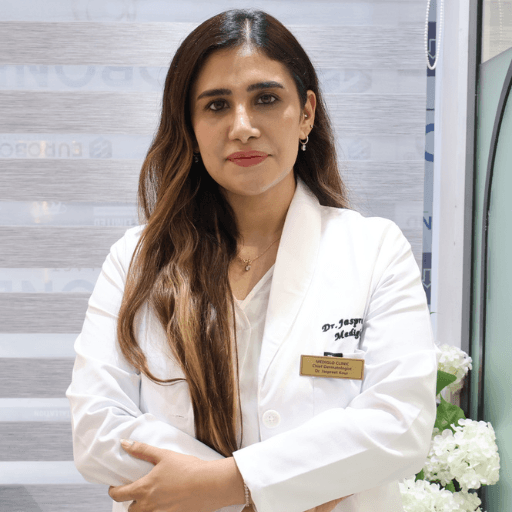
Dr Jaspreet Kour

Dr. Jaspreet Kour

Dr. Jaspreet Kour is one of Gurgaon’s most rigorously trained dermatologists specialising in pigmentation, melasma and aesthetic skin care for Indian skin. Her practice combines evidence-based dermatology with international aesthetic training, with every patient treated personally.

Member

IADVL (Indian Association of Dermatologists)

Member

CDSI (Cosmetic Dermatology Society of India)

Member

ACSI (Association of Cutaneous Surgeons of India)

Member

AAAM - USA (American Academy of Aesthetic Medicine)